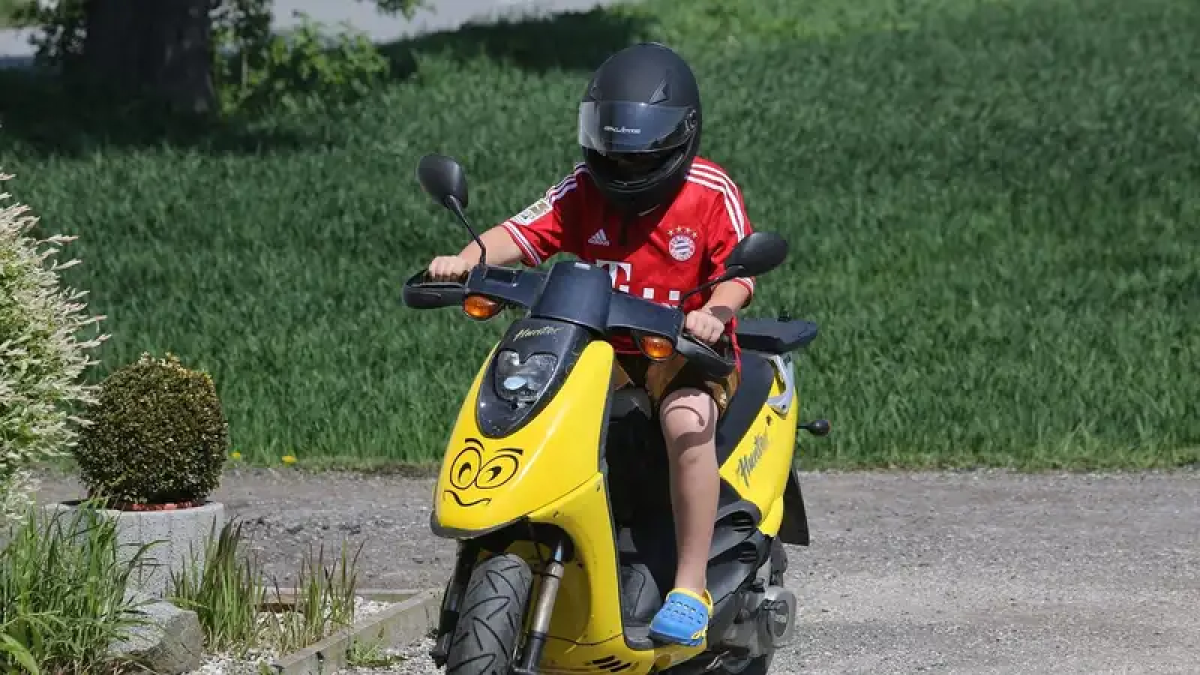
Morning near an ordinary Vietnamese school: dozens of bikes, driven by teenagers aged fifteen or seventeen. It's an unusual scene for us, but in Vietnam, it's been developing for decades.
Vietnam embraced two-wheeled transport en masse long before regulations, licensing and controls took on the form we know today.
Pro-American South: Honda Came Before Mass Motorization
By 1975, approximately 750 Honda Super Cubs were sold in South Vietnam . Small, inexpensive to operate, and easy to repair, the motorcycle quickly became a popular form of transportation. Bikes were bought by families, passed down to children, sold, and resold. In the south of the country, motorized two-wheeled transport had become a part of everyday life even before the unification of Vietnam.
The popularity of the Honda Cub was such that the brand name became a household word and any bike was called a "Honda".
Pro-Soviet North: Bicycles and Rare Motors
In the north, the bicycle remained the main personal transport for a long time. Motorcycles were much fewer, and the equipment came, among other things, from socialist countries; there were also Czechoslovakian ones. Babette, Soviet and East German models.
1990s: Japanese Cub and Thai Dream
Following economic reforms and the opening of the market, the number of motorcycles began to grow rapidly. Used Japanese motorcycles began to arrive in Vietnam en masse. Honda Cub 78, Cub 79, Cub 81The latter received a local nickname. kim vàng giọt lệ - "golden needle, drop of tear."
The Thai-assembled Honda Dream soon gained immense popularity . The first batch of Dreams in 1992 cost around 45 million dong. A bike was worth as much as a plot of land, and it was treasured, ridden only on special occasions.
Helmets became mandatory much later.
Mass-market bikes emerged before strict national helmet requirements were introduced. The turning point came in 2007 with the adoption of Resolution No. 32. Mandatory helmets were introduced on national roads on September 15, and from On December 15, 2007, on all roads of the country.
After this, the streets of large cities were literally filled with drivers wearing helmets in a short period of time.
When the bikes were imported from Thailand, they were worth about the same as a plot of land. Once Honda began assembling them in Vietnam, the price dropped, and in a relatively short time, motorcycles became the primary means of personal transportation for millions of families.
What about schoolchildren?
School might be far from home, public transportation might not be suitable for everyone, parents might work, and a small, low-capacity bike might allow a teenager to get around independently. However, the law specifically distinguished between low-powered bikes. xe gắn máy and more powerful motorcycle which one could sit on after 18 years of age.
Small-capacity vehicles, electric models, and full-fledged motorcycles may look similar, and systematic monitoring near schools has long been limited. Consequently, schoolchildren on bikes have gradually become a common sight.
Now control is becoming stricter
In recent years, police have increasingly conducted inspections directly near schools. They use cameras, record license plates, and share information about violators with educational institutions.
The administrative liability regime for minors is also changing. Decree 238/2026, which comes into effect on August 15, imposes penalties for those aged 16 to 18 operating motorcycles and similar vehicles.
This has prompted social media posts along the lines of "teenagers will be banned from riding motorcycles entirely." This isn't the case yet; the decree only regulates fines and doesn't affect the law or age requirements. But rumors are never without reason, especially in Vietnam.