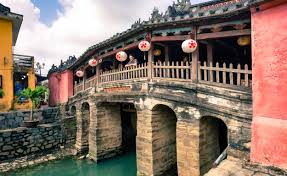
The Japanese Covered Bridge was built in the late 16th century by the Japanese community, which was actively involved in international trade through the port of Hoi An. The structure connected the areas where Japanese and Chinese merchants lived.
The bridge boasts an unusual architecture: the wooden structure is covered with a roof, protecting it from tropical rains and sunlight. Bridges like these are rare in the region, making it a unique architectural landmark.
At the center of the bridge is a small temple dedicated to traditional spiritual practices. This makes the structure not only a means of transportation but also a religious monument.
Over the centuries, the bridge has been repeatedly restored, yet retains its historical appearance and cultural significance. Today, it remains the main symbol of Hoi An and is often depicted on tourist materials and souvenirs.
For most travelers, their introduction to the city begins with the Japanese Covered Bridge, which reflects the region's rich history of international trade and cultural interaction.